

The 5TH Southern African Solar Energy Conference (SASEC 2018) will be held from 25 to 27 June 2018 at the Blue Waters Hotel in Durban, South Africa. This is the first time SASEC will be coming to South Africa's ocean side playground, where the warm African sun meets the balmy waters of the Indian Ocean. Come and join us!
The conference will focus on both Solar Photovoltaic and Solar Thermal Energy technology systems and applications. The conference provides the opportunity for researchers, engineers, technologists and individuals to share and discuss recent developments in the field. It is a particularly good opportunity for postgraduate students to showcase their research progress, network and develop knowledge of solar energy technologies.
The conference will start on the Monday morning with a plenary session after which the presentations will split into PV and Solar Thermal tracks. Delegates are invited to attend a welcoming cocktail function on Monday evening, while Tuesday will follow a similar programme with the Conference Dinner in the evening. The conference will end on the Wednesday.
The conference will have a specific focus on research, technology development and deployment of solar energy in the South African context shared with experiences from other parts of the world. To benefit the Solar Energy community as a whole, engineers and scientists from academia and industry are encouraged to share their on-going and completed research, technology developments and experiences with technology deployment at the conference.
Presentations at SASEC will be subject to acceptance of an abstract. The review process will consist of an initial review of one-page abstracts followed by a rigorous review of the complete papers. Comprehensive conference proceedings, with the following allocated ISBN number: 978-0-7972-1765-2, will be published.
Topics of Interest »
- General Solar Energy
- Solar Thermal Energy
- Solar Photovoltaics
- Solar Resource
- Concentrating Solar Power
- Industrial and Domestic Solar Heating
Keynote Speakers »
Keynote Speaker 1: Dr.Ing Michael Geyer
Solar Thermal Energy
Chief Development Officer of Abengoa-Algonquin Global Energy Solutions
Dr.Ing.Michael Geyer successfully developed and implemented many large international commercial CSP projects from scratch to financial close. Since 2007 he built up and lead Abengoa's international solar business and project developments in solar key market countries Algeria, Egypt, Chile, China, India, Morocco, South Africa and United Arab Emirates. Today he is Chief Development Officer for AA-GES - a new joint venture for project development of Abengoa and Algonquin Power Utilities Corporation.
Between 2000 and 2008 he served as the Executive Secretary of the IEA SolarPACES Implementing Agreement (www.solarpaces.org). Since November 2007 he has been elected Vice-President of the European Solar Thermal Electricity Association ESTELA (www.estelasolar.org). He is author or co-author of more than 60 publications in the mentioned fields, including technical books, journals, conference papers, studies and reports.
Keynote Speaker 2: Dr. Claudia Buerhop-Lutz
Fault Detection in Solar Parks – Thermography and Electroluminescence
Dr. Claudia Buerhop-Lutz holds a doctorate in material science from the Friedrich-Alexander University of Erlangen-Nürnberg in Germany. She works at the Bavarian Center for Applied Energy Research (ZAE Bayern) in Erlangen, Germany, where she is responsible for the thermographic inspections of PV-modules, especially PV-plants. ZAE Bayern was a pioneer in IR-thermography for outdoor analysis of PV-modules and now works with aerial drone-mounted IR-imaging systems.
Keynote Speaker 3: Prof. G. Kumar Venayagamoorthy
Photovoltaics in Grid and Stand-Alone Systems
G. Kumar Venayagamoorthy is the Duke Energy Distinguished Professor of Power Engineering and Professor of Electrical and Computer Engineering and Automotive Engineering at Clemson University. He is the Founder (2004) and Director of the Real-Time Power and Intelligent Systems Laboratory (http://rtpis.org). He holds an Honorary Professor position in the School of Engineering at the University of Kwazulu-Natal, Durban, South Africa. Dr. Venayagamoorthy has a PhD and MScEng degrees from the University of Kwazulu-Natal and a MBA degree in Entrepreneurship and Innovation from Clemson University. Dr. Venayagamoorthy's interests are in the research, development and innovation of smart grid technologies and operations, including intelligent sensing and monitoring, intelligent systems, integration of renewable energy sources, power system optimization, stability and control, and signal processing. He has published over 500 refereed technical articles. His publications are cited over 14,000 times with a h-index of 59.
Important Dates »
| 1st Call for Abstracts: | 04 October 2017 |
| 2nd Call for Abstracts: | 09 November 2017 |
| 3rd Call for Abstracts: | 10 January 2018 |
| Abstracts due: | 06 February 2018 |
| Notification of Acceptance: | 06 March 2018 |
| Full Paper due: | 06 May 2018 |
| Early Bird registration extended to: | 01 June 2018 |
| Revised Full Paper due: | 11 June 2018 |
| Conference: | 25 – 27 June 2018 |
Full paper submission »
Instructions to authors:
You can view the status of your submission on the SASEC OpenConf Conference Management System under Authors > Check Status
OpenConf system « this link has been deactivated
Full paper submission has now been closed
Revised FULL PAPERS must be converted to an Acrobat .pdf file for electronic submission and submitted on-line to the OpenConf system by Monday 11 June 2018. This is only necessary if corrections have been requested by the reviewers in.FULL PAPER COMMENTS under Authors > Check Status
There is a limit of 8Mb for the file size.
- Click 'Submit full paper' button below to access the OpenConf system
- Choose 'Upload file' from the Authors menu
- This will take you to the Upload File page
- Enter your Submission ID & password (There is a forgot ID & forgot password utility).
- Upload your .pdf file
Presentation guidelines
General Information and Format
Sessions are comprised of individual paper presentations that are organized into topic areas by the conference program committee. Papers in the session are presented sequentially in 15-minute presentation blocks, with 5-minute reserved after all the formal presentations for questions.
Visual Aids
All presentation session rooms are equipped with screens and data projectors. If you are a Mac user, please be sure to bring the correct Mac VGA adaptor. Note that overhead projectors for transparencies are not provided in session rooms.
Preparation
All presentations must be in Microsoft PowerPoint format (.pptx). Please use Microsoft PowerPoint 2007 or later.
All PowerPoint presentations must be uploaded prior to the session, as it is not possible to run PowerPoint presentations directly from a laptop in the session rooms.
At the Session
- Please arrive at the session room at least 15 minutes before the start of the session;
- Check the room where the session will be held and familiarize yourself with the space and equipment;
- Meet the chair/co-chairs and run through the session line-up (i.e., order, panel discussion, special circumstances);
- A presentation timer will be available in the room. The presenter is responsible for delivering the presentation within the specified time. The session chair/co-chairs have received instructions to stop the speakers if they run over their time.
Registration »
| Early Registration Up to 1 June 2018 |
Late Registration From 2 June 2018 |
|
| Standard fee | R7000 | R9000 |
| Student fee | R4000 | R5000 |
| ISES Member | R6000 | R8000 |
The conference fees include: registration material, lectures, teas, lunches & registration cocktail party and conference dinner for one.
Accommodation »
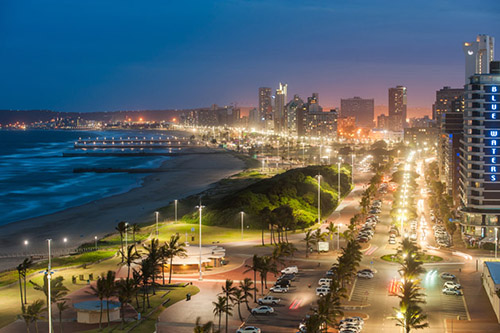
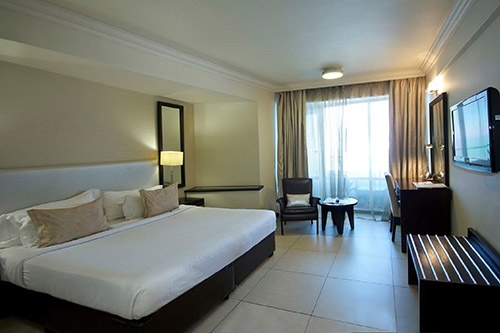
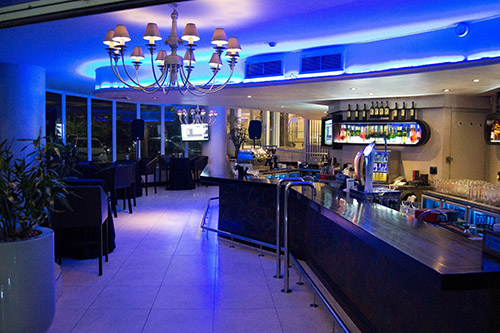
Blue Waters Hotel
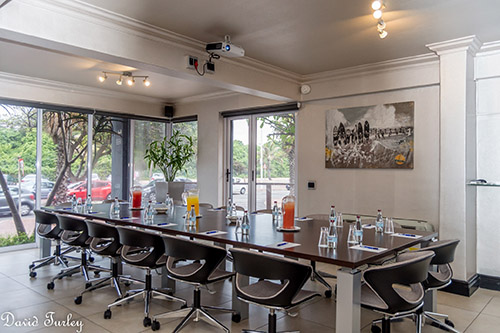
The Blue Waters Hotel will serve as the conference venue, and the most convenient accommodation option.




Tsogo Sun Suncoast Towers
The Tsogo Sun Suncoast Towers is also recommended as an alternate accommodation choice for conference delegates. The hotel is within 5 minutes walking distance of the Blue Waters Hotel.

Organisers & Partners »




Organising Committee »
| Prof Sampson Mamphweli | Stellenbosch University |
| Dr Michael Brooks (Conference Chair) | University of KwaZulu-Natal |
| Prof Ernest van Dyk | Nelson Mandela Metropolitan University |
| Prof Johan van der Spuy | Stellenbosch University |
| Mr Jean Pitot | University of KwaZulu-Natal |
| Ms Carla Nel | Stellenbosch University |
| Ms Deidre Raubenheimer | UCT Conference Management Centre |
SASEC International Advisory and Review Committee »
| Prof Carsten Agert | University of Oldenburg |
| Dr Bernard Bekker | Stellenbosch University |
| Prof Alan Brent | Stellenbosch University |
| Dr Michael Brooks | University of KwaZulu-Natal |
| Prof Ken Craig | University of Pretoria |
| Prof Frank Dinter | Fraunhofer Chile |
| Dr Paul Gauché | SANDIA National Laboratories |
| Prof Thomas Harms | Stellenbosch University |
| Dr Stefan Hess | INATECH, University of Freiburg |
| Dr Jaap Hoffmann | Stellenbosch University |
| Dr Peter Klein | CSIR |
| Mr Stephen Koopman | CSIR |
| Dr Willem Le Roux | University of Pretoria |
| Dr Matti Lubkoll | Stellenbosch University |
| Prof Sampson Mamphweli | Stellenbosch University |
| Dr Alan Matthews | University of KwaZulu-Natal |
| Mr Jean Pitot | University of KwaZulu-Natal |
| Mr Vikesh Rajpaul | Eskom |
| Dr Dave Renné | International Solar Energy Society |
| Dr Christoph Richter | DLR |
| Dr Arnold Rix | Stellenbosch University |
| Mr Thomas Roos | CSIR |
| Dr Kittessa Roro | CSIR |
| Dr Ross Schultz | Nelson Mandela Metropolitan University |
| Prof Michael Simon | University of Fort Hare |
| Dr Henerica Tazvinga | CSIR |
| Prof Johan van der Spuy | Stellenbosch University |
| Prof Ernest van Dyk | Nelson Mandela Metropolitan University |
| Prof Wikus van Niekerk | Stellenbosch University |
| Prof Theo von Backström | Stellenbosch University |
| Prof Frederik Vorster | Nelson Mandela Metropolitan University |
| Mr Werner Weiss | AEE INTEC |
| Prof Ewa Zawilska | Mangosuthu University of Technology |
Supporting Partners »


General information »
Things to do
Weather
Please click here to view the expected 7 / 15 day weather forecast you may experience while in Durban.
Time differences
South Africa operates two hours ahead of Greenwich Mean Time throughout the year, making it an hour ahead of Central European Winter Time, seven hours ahead of Eastern Standard Winter Time and seven hours behind Australian Central Time.
Passports and visas
Nationals of some countries will require a visa to enter South Africa. To find out if you need a visa and how to go about getting one, please visit the official South African Government visa website: www.home-affairs.gov.za, or to contact your local South African consulate/own government authority.
Should you require a letter of invitation for a visa, we ask that you submit a request to the conference organisers.
The letter of invitation will then be sent to you within 2 working days, provided that the full registration fee has been paid.
Visas are issued by the South African missions abroad and must be affixed in the applicant's passport before departing for South Africa.
Visas are not issued on arrival at South African ports on entry. Many nationalities do not require a visa to enter South Africa – please check with your travel agent.
Clothing
The seasons in the Southern Hemisphere are directly opposite to those of the Northern Hemisphere. For summer months, lightweight (cottons and linens), short-sleeved clothes are best, although a light jersey/jumper might be needed for the cooler evenings. Warmer clothes are needed for the winter months.
Banks and money
The currency unit is the Rand, denoted by the symbol R, with 100 cents making up R1 (one Rand). Foreign currency can be exchanged at local banks and Bureaux de Changes. Most major international credit cards such as American Express, Diners Club, MasterCard, Visa and their affiliates are widely accepted.
Please consult www.xe.com to do an exchange rate conversion.Electricity
The electricity supply in South Africa is 220/230 volts, AC 50 Hz. Please ensure that you bring the correct converter for your electrical equipment.
Tipping
Most restaurants do not add a service charge to bills - thus it is customary to leave a 10-15% tip. Parking and petrol station attendants should be given whatever small change you have available. This is always appreciated, even though it may seem a small amount.
Tax
Value-added-tax (VAT) is charged on most items. Foreign tourists to South Africa can have their 14% VAT refunded provided that the value of the items purchased exceeds R250.00. VAT is refunded at the point of departure provided receipts are produced.
Disabled travellers
An increasing number of accommodation establishments have wheelchair ramps and bathroom facilities for the disabled. Almost every national park has at least one accessible chalet and many accommodation establishments have one or two wheelchair-friendly rooms. Most of our sports stadiums have accessible suites, stands or areas for wheelchairs near accessible parking as well as special toilet facilities. Most public buildings also caters for wheelchair access.
Health and safety
Many foreigners are unaware that South Africa has a well-developed infrastructure, high standards of water treatment and medical facilities equal to the best in the world. Here we address any health and safety questions you may have:
Hospitals and Medical Care
In a great many medical disciplines, South Africa is a global leader. In fact, South African trained doctors are sought after all over the world, so this should give an indication of the standard of medical care available. There is a large network of public and private hospitals countrywide, offering excellent service. However, clients must have adequate health insurance to cover the fees private hospitals charge.
Malaria
Malaria is found only in the far north-east of the country. Malaria is not much of a risk in the winter months from May to July. Although the incidence of malaria is rare, it would be best to take adequate precautions if you choose to visit these areas. The cheapest, safest and most effective measures against malaria are physical barriers such as a mosquito net, and the use of a good insect repellent. If you decide to take malaria prophylaxis, it is essential that you take the medication according to the directions on the package insert. It is advisable to consult a medical professional before embarking on a course of malaria prophylaxis. Note that expectant mothers should avoid malaria medications.
Personal Safety
For tourists, South Africa is as safe as any other destination in the world. South Africa boasts a vast array of cultures, communities, sites and attractions. Most parts of the country can be safely visited by tourists provided they take basic common-sense precautions (for example not walking alone in deserted areas at night and being circumspect about how much photographic equipment or flashy jewellery you carry).
Food and Water
As a rule, tap water in South Africa is safe to drink as it is treated and is free of harmful micro-organisms. In hotels, restaurants and nightspots, the standards of hygiene and food preparation is top-notch. It is safe to eat fresh fruit and salads and to put as much ice as you like in your drinks - a good thing, too, after a day on the beach or in the bush.
Road Safety
Our transport infrastructure is excellent and our roads are in good condition.
We have very strict drinking and driving laws - with a maximum allowable alcohol blood content of 0.05%. Translated that means about one glass of wine for the average woman and perhaps 1.5 or two for the average or large man. Our speed limits are 120kmph on the open road, 100kmph on smaller roads and between 60 and 80kmph in towns.
Driving
All visitors intending to drive are required to obtain an international drivers permit, visitors found driving without a permit will be fined and not permitted to continue on their journey. Visitors will also not be able to rent a car without a valid driver's permit. The wearing of seatbelts is compulsory and strictly enforced by law. Speaking on mobile phones whilst driving is only allowed via a hands-free kit. South Africans drive on the left hand side of the road.
Vaccinations
Visitors who are entering South Africa from a yellow fever zone must have a valid international yellow fever inoculation certificate. Only infants under the age of one year are exempt. Immunisation against cholera and smallpox are not required and no other vaccinations are required when visiting South Africa.
Plan your trip
By Road
An excellent network links all major points within the Durban region and surrounds.
Speed limit is 120km/h on open freeways, 80km/h on urban freeways and 60km/h in built-up areas.
Drive on the left side of the road. Road signage is in accordance with international codes. Foreign tourists require an international driver's licence, or one from their country of origin that has been certified by their Consulate.
It is against the law to make use of your cellular phone (mobile) while driving, and use of seat (safety) belts is compulsory.
*Legal blood/alcohol limit: 0.05mg per 100ml (approx. one tot).
By Coach
Elwierda: 021 418 4673
Greyhound: 083 915 9000
Intercape Mainliner: 0861 287 287
Translux: 0861 589 282
By Train
Blue Train: 012 334 8459
Metrorail: 080 065 6463
Rovos Rail: 021 421 4020
Shongololo Express: 086 177 7014
Shosholoza Meyl: 086 000 8888
By Air
FlySafair: 0871 351 351
Kulula.com: 0861 585 852
Mango: 086 100 1234
SA Airlink: 0861 359 722 / 044 801 8448
SA Express: 0861 606 606 / 044 801 8448
South African Airways: 0861 359 722
Metered Taxis & Car Hire
Budget Car Rental: 0861 016 622
Car Hire 4 U: 082 818 0030
Europcar Rental: 0860 011 344
First Car Rental: 0861 011 323
Hertz Rent a Car: 0861 600 136
Tempest Sixt Car Hire: 0861 836 7378
5*Car Rental: 082 783 2592
Metered taxis can be hailed at taxi ranks, however they are often crowded and operate along set routes, so you may prefer a private taxi.
Trips & Tours
Take a guided walking tour or set off on your own after collecting a 'Stellenbosch on Foot' brochure from the Stellenbosch 360 office at 36 Market Street.
For that special experience, enjoy a horse-drawn carriage ride through the vineyards.
Self-drive is recommended for venturing farther afield. There are several guided tours of the town, winelands and outlying regions.
Liability
The Congress Organisers have taken all reasonable care in making arrangements for the Congress, including accommodation. In the event of unforeseen disruptions, neither the Congress Organisers nor the Society can be held responsible for any losses incurred by delegates. The Congress organisers act as agents only in securing hotels, transport and travel services, and shall in no event be liable for acts or omissions in the event of injury, damage, loss, accident delay or irregularity of any kind whatsoever during arrangements organised through contractors or by the employees of such contractors. Hotel and transportation services are subject to the terms and conditions under which they are offered to the general public. Delegates should make their own arrangements with respect to personal insurance. The Congress organisers reserve the right to make changes as and when deemed necessary, without prior notice to the parties concerned. All disputes are subject to resolution under South African Law.
Contact us »
General conference enquiries
Ms Deidre Raubenheimer
Tel: +27 (0) 21 406 6167
Fax: +27 (0) 21 650 1926
Email: deidre.raubenheimer@uct.ac.za


